
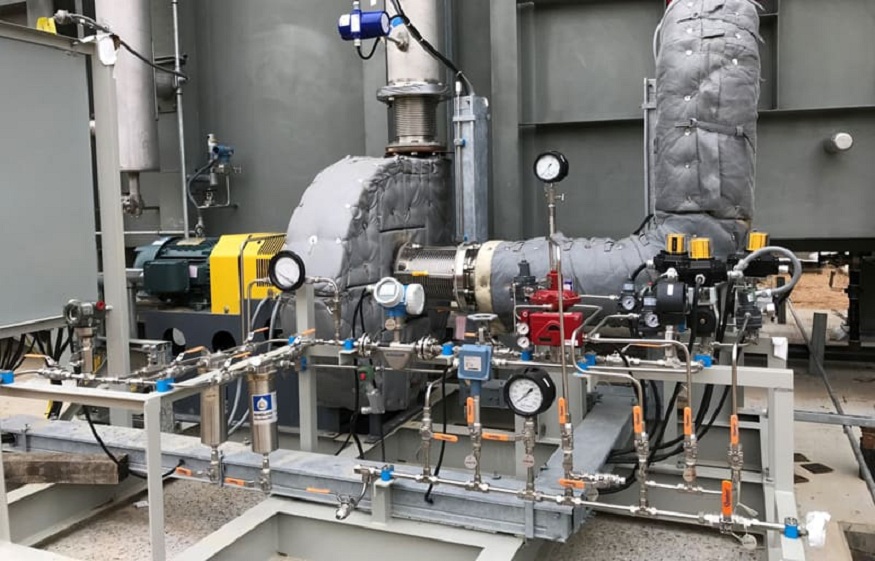
Ammonia injection grids (AIGs) are critical components in industrial emissions control systems, particularly in applications where ammonia is injected into exhaust gas streams to support nitrogen oxide (NOx) reduction processes. The effectiveness of an injection grid directly influences reagent distribution, system efficiency, and overall environmental performance. As a result, careful ammonia injection grid fabrication and engineering are essential to ensure reliable operation under demanding process conditions.
A Brief Insight into Ammonia Injection Grid Fabrication
Ammonia injection grid fabrication represents a critical component of modern emissions control technology, particularly for selective catalytic reduction (SCR) systems designed to reduce nitrogen oxide (NOx) emissions in industrial applications. These specialized grids require precision engineering and quality manufacturing to ensure optimal performance in demanding operational environments.
The fabrication of an ammonia injection grid begins with a thorough understanding of the operating environment. Industrial facilities often require systems that can withstand elevated temperatures, fluctuating flow rates, and corrosive process conditions. To meet these challenges, injection grids are typically engineered as custom assemblies designed around the specific characteristics of each installation. The objective is to achieve uniform ammonia distribution across the entire gas stream while minimizing pressure losses and reducing the potential for ammonia slip.
Read More: Charles Spinelli Provides an Introduction to Business
A well-designed injection grid consists of multiple distribution headers, injection lances, nozzles, support structures, and connecting piping. During fabrication, each component must be manufactured to precise tolerances to ensure consistent flow patterns throughout the system. The positioning and sizing of nozzles are especially important because they determine how effectively ammonia mixes with the process gas before reaching downstream treatment equipment. Proper nozzle arrangement helps create a homogeneous ammonia concentration profile, maximizing pollutant removal efficiency.
Material selection plays a significant role in fabrication quality. Injection grids are commonly constructed from materials capable of resisting corrosion, thermal stress, and mechanical wear. Depending on the application, fabricators may utilize carbon steel, stainless steel, or other specialized alloys. Material choices are based on operating temperature, gas composition, and long-term durability requirements. Selecting appropriate materials helps extend service life and reduces maintenance demands over time.
Modern fabrication practices often involve modular construction techniques. By assembling major sections in a controlled manufacturing environment, fabricators can improve quality control, reduce field installation complexity, and shorten project schedules. Modular fabrication also allows for comprehensive inspection and testing before shipment. Components can be checked for dimensional accuracy, weld integrity, and proper assembly, helping ensure that the completed system performs as intended once installed.Precision welding and pipe fabrication are essential throughout the manufacturing process. Since ammonia handling equipment operates under strict safety and performance requirements, fabricated assemblies must comply with recognized engineering and construction standards. High-quality welds, properly aligned piping, and robust structural supports contribute to the overall reliability of the injection grid. Thorough inspection procedures are typically implemented to verify fabrication quality before the equipment leaves the manufacturing facility.
Integration with process control systems is another important consideration. Injection grids function as part of a larger ammonia handling and distribution network that may include storage systems, transfer equipment, flow control units, instrumentation, and automated controls. Effective fabrication therefore requires close coordination between mechanical and control system design to ensure accurate ammonia delivery and responsive process control. Comprehensive monitoring and control capabilities help maintain optimal operating conditions while supporting safe system performance.